L’Oreal is perennially at the forefront of beauty tech innovation. The company’s new patents provide a peek into the future to see what cutting-edge products are on the horizon. Read on for a discussion of three of L’Oreal’s new US patents issued in September.
Stop guessing when to change the brush in your powered facial cleansing device
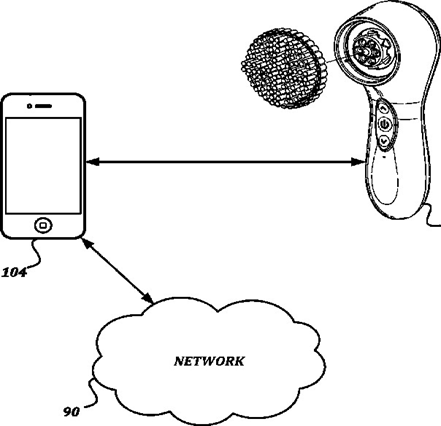
New U.S. Patent No. 11,116,308 describes how the brush can be linked through your phone to record the number of times you use your device, and then recommend when to change the brush. The new invention could also let you know when to reorder your serum or cleanser; or be used to determine when you need new lights for your hand-held light emitting device. Since the system keeps track of your usage, it could remind you that it is time to cleanse your skin with the power brush when there is detection of lack of use.
The ‘308 patent broadly claims a “personal care device” and a method of using the personal care device, so it may also cover smart toothbrushes. Toothbrushes connected to apps that give feedback about how well you are brushing your teeth are known, but they send you replacement brushes on a regular schedule not tied to your actual use. They are not yet sophisticated enough to count the number of uses and duration of use to calculate when a replacement brush is needed. For that reason, this invention should have application to the oral healthcare industry as well as to skincare.
Book that elegant spa getaway and leave your cosmetics bag at home
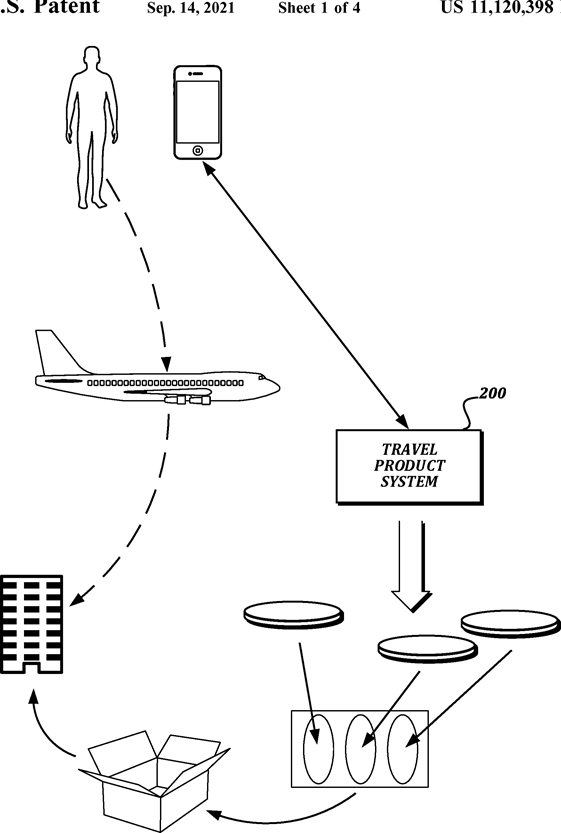
U.S. Patent No. 11,120,398 recognizes the problems associated with attempting to travel with all bottles and containers of you need for your daily grooming. You can never be quite sure when you aren’t in compliance with regulations, meeting with the unpleasant fate of having your expensive potions discarded at the security checkpoint. Another problem with packing cosmetics for travel is that consumers purchase their products in larger sizes to use them longer before having to reorder them. The solution provided by the ‘398 patent is to direct the appropriate amount of the products you use to be packaged and delivered to your destination. Shampoo, deodorant, facial cleanser, perfumes and even toilet paper can be conveniently shipped ahead for you by the travel product system.
The smart travel system can include a preference determination engine and a product determination engine. The preference determination engine decides which toiletries you would like based on retail purchase history such as analyzing your Sephora purchases. Building upon your preferences, the product determination engine can finesse product choices for your travel destination and activities. For example, choosing a foundation with higher SPF if the destination is a sunny climate or choosing an appropriate moisturizer if your plans take you to a dry climate. An excellent idea, but hiccups in delivery may prevent the mini-cosmetic bottles ordered from reaching their destination. Delivery delays; mixed up orders; the front desk misplacing your package; or even the bellhop delivering it to the wrong room could all thwart the best-laid travel product supply plans of this smart system.
Coming to the Dermatologist’s Office

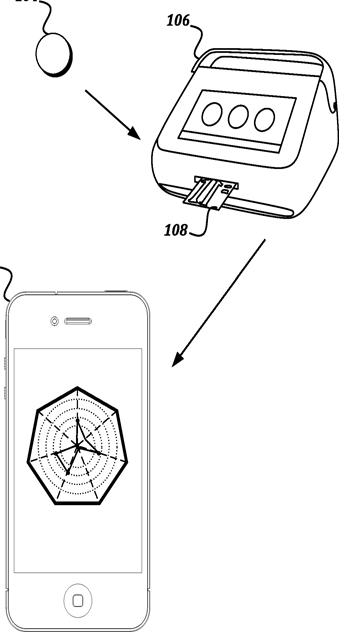
The first two patents related to inventions likely to be directly used by consumers, but L’Oreal’s U.S. Patent No. 11,127,176 protects a method of predictive facial aging for use in a clinic or spa setting. The system described in the patent is to give a patient a better idea of how their skin may age, and how they may slow the predicted aging process with the appropriate skincare products. Sampling discs are attached to a patient’s skin to obtain skin cells, which are analyzed for up to four relevant protein biomarkers. Based on the concentration of the biomarkers, a spiderweb-like diagram is produced which predicts likelihood of future aging based on characteristics such as redness, dehydration, visible spots, shininess and fine lines. The graphical representation allows the patient to explore how their skin conditions may change over time. Upon input of a proposed skin care regimen, a trend visualization engine can update the predicted course of aging to estimate the success of the selected skin care regimen in slowing an aged appearance. The patent also states that some of the identified protein biomarkers are indicative of whether or not a person will respond to the use of retinol for under-eye wrinkles.
 Beauty and the Law